Japan's Business Manager Visa Just Got Harder: What the October 2025 Changes Mean for Foreign Founders
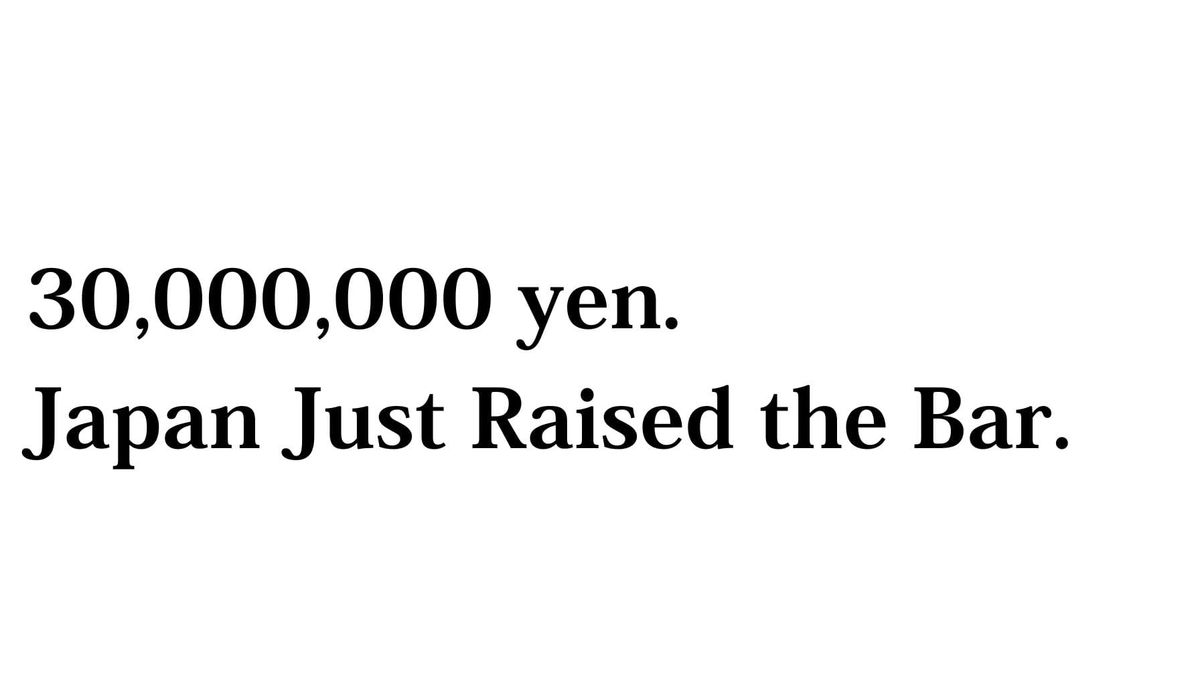
As of October 16, 2025, Japan's Business Manager Visa requirements changed significantly. The minimum capital threshold increased sixfold. Japanese language proficiency is now mandatory. A physical office and at least one full-time employee must be in place before application.
For foreign founders who planned their Japan entry under the previous framework, the recalibration is material — not procedural.
How Japanese Institutions Read Operational Signals
Japanese regulatory bodies evaluate business health through a specific matrix: capital reserves, employment structure, physical presence, and adherence to local standards.
The increase in minimum capital from 5,000,000 yen to 30,000,000 yen is not simply a financial threshold. It functions as an institutional signal filter. Entities that meet the requirement demonstrate financial commitment at a level that Japanese authorities interpret as indicative of long-term operational intent.
Businesses that rely on virtual offices, minimal staffing, or English-only documentation send the opposite signal — regardless of their actual viability. Japanese institutions interpret these gaps as indicators of a company that has not fully committed to operating within Japan's regulatory and commercial environment.
Where Onboarding Momentum Stalls
The new requirements introduce friction at multiple points that foreign founders frequently underestimate.
The mandatory B2-level Japanese language proficiency requirement closes a pathway that many founders previously relied upon — managing institutional interactions through interpreters or bilingual staff. Visa examiners now expect the applicant themselves to demonstrate communicative integration with the local business environment.
The expert-reviewed business plan requirement adds another layer. Plans that meet international standards for investor presentations do not automatically satisfy Japanese institutional expectations. Local reviewers evaluate whether the business model is viable within Japan's specific regulatory and commercial context — not whether it would perform in a global market.
Each of these elements can stall the application at a different stage, compounding delays for founders who treat them as sequential rather than simultaneous requirements.
Verification Escalation: When Simple Requirements Become Multi-Stage Processes
The full-time employee requirement is a clear example of how a single condition generates cascading documentation demands.
Satisfying this requirement involves more than a signed employment contract. Institutions verify labor law compliance, employment conditions, payroll structure, and the legitimacy of the employment relationship itself. Each verification stage requires documentation, and each documentation gap triggers follow-up inquiries.
Foreign founders accustomed to more linear approval processes often interpret these escalations as institutional hostility or bureaucratic inefficiency. The more accurate interpretation is that Japanese institutions apply a thorough evaluative framework designed to assess operational substance — not just formal compliance.
Operational Credibility Under the New Framework
Under the revised requirements, operational credibility is established before the visa application is filed — not during the review process.
Institutions evaluate whether the physical office is legitimate and permanent, whether the employee relationship reflects genuine operational need, whether the business plan reflects an understanding of the Japanese market, and whether the capital structure supports the declared business activities.
Founders who arrive at the application stage with all of these elements in place move through the process at a materially different pace than those who treat the requirements as boxes to check.
Why Institutions Hesitate — and What That Hesitation Means
Slow or unclear responses from Japanese immigration authorities are frequently interpreted as rejection signals. They are not.
Japan's institutional decision-making operates on a consensus basis. Multiple internal stakeholders review applications before a determination is made. This process takes time by design — it is not a sign that the application is in trouble.
What does signal trouble is an application that generates questions. Each unanswered question triggers a round of internal consultation. Founders who submit applications with gaps — in documentation, in operational substance, or in alignment between declared and demonstrated activities — extend their own timelines.
The October 2025 reforms raised the entry threshold. They did not change the underlying institutional logic. Understanding that logic remains the most direct path to a successful application.
What This Means for Founders Planning Japan Entry Now
The transition period for existing Business Manager Visa holders runs until October 2028. New applicants must meet the revised requirements immediately.
For founders in the planning stage, the practical implication is that Japan entry now requires substantially more preparation time and capital than the previous framework demanded. The pathway remains open — it is more clearly defined than it has ever been, and the definition favors founders who are genuinely prepared to operate in Japan rather than those using the visa as a market exploration mechanism.
Need a Visa Risk Assessment Before You Apply?
Japan's Business Manager Visa now evaluates operational substance before it evaluates paperwork. Knowing where your profile stands before you begin the formal process can significantly reduce unnecessary delays.
→ Check your Japan Business Manager Visa eligibility and risks
→ Research the Japanese market using native Japanese sources
Based in Kyoto. Assessment based on current October 2025 requirements and Japanese institutional standards.