Why Japanese Regional Businesses Need a Clear “First Explanation” for Foreign Buyers
apanese regional businesses often have real value, but overseas customers may not understand it from a company profile, product photo, or direct translation. A clear first explanation can make the difference between confusion and interest.

Many Japanese regional businesses do not have a product problem.
They have an explanation problem.
The product may be useful. The service may be reliable. The company may have a long local history. The founder may have strong technical knowledge. The customer relationships may be deep and stable inside Japan.
But when a foreign buyer, overseas founder, investor, distributor, or business partner looks at the company from outside Japan, that value is often difficult to understand quickly.
The issue is not always language ability.
It is the first explanation.
What is this business?
Who is it for?
Why does it matter?
What should a foreign customer do next?
If those questions are not answered early, overseas interest can disappear before a real conversation begins.
Local Context Does Not Travel Automatically
Inside Japan, many regional businesses are understood through local context.
People may know the company because it has operated for many years. They may understand the product category because it is part of local life. They may trust the owner because of introductions, reputation, community ties, or long-term relationships.
That context does a lot of work.
But overseas customers do not arrive with that background.
A foreign buyer may not know the local region. They may not understand the product category. They may not know why one producer, workshop, service provider, or local company is different from another.
They may only see a website, a brochure, a product photo, a social media post, or a translated company description.
If the explanation starts with details that only make sense to Japanese readers, the foreign customer has to work too hard.
Many will not continue.
This is why regional businesses need a first explanation designed for people who do not already understand the local context.
A Company Profile Is Not a Customer Explanation
One common mistake is to treat a company profile as the first explanation.
A company profile usually answers questions such as:
- When was the company founded?
- Where is it located?
- What does it produce?
- How many years has it operated?
- What values does it have?
- What is its local history?
These details can be useful.
But they are not always the first thing a foreign customer needs.
The first explanation should answer a different set of questions:
- What problem does this solve?
- Who would use it?
- Why is it relevant outside Japan?
- What makes it different from a similar product or service?
- What is the next step if someone is interested?
For example, a local food producer may have a long history and a respected production method. But a foreign buyer may first need to understand whether the product is for retail, restaurants, gifting, health-conscious consumers, tourism, specialty import, or premium e-commerce.
A traditional craft business may describe its technique in detail. But an overseas reader may first need to know whether the item is decorative, functional, collectible, customizable, export-ready, or suitable for interior design projects.
A local service provider may explain its internal process. But a foreign customer may first need to know whether the service is available in English, whether it can support non-residents, and what kind of problem it solves.
The company profile can come later.
The first explanation needs to create understanding.
Translation Alone Is Not Enough
Many businesses assume that English translation solves the problem.
Sometimes it helps.
But direct translation often carries Japanese assumptions into English without rebuilding the explanation for a foreign reader.
A translated sentence may be grammatically correct but still unclear.
For example, phrases such as "high quality," "carefully made," "local tradition," "trusted service," or "customer-first approach" are common. They may be true, but they are not specific enough for overseas readers.
Foreign customers usually need more concrete information.
What kind of quality?
Compared with what?
Why is the local tradition relevant to the buyer?
What does the service actually include?
What problem does it solve?
What proof or example can support the claim?
Translation changes the language.
Positioning changes the meaning.
For overseas communication, both are necessary.
The Four Questions a First Explanation Should Answer
A useful first explanation does not need to be long.
It needs to be clear.
For many Japanese regional businesses, the first explanation should answer four questions.
First: what is it?
This sounds simple, but it is often skipped or buried under history. A foreign reader should quickly understand the product, service, or business category.
Second: who is it for?
Is it for consumers, retailers, restaurants, hotels, investors, travelers, property buyers, business owners, or local governments? If the audience is unclear, the reader may not know whether the business is relevant.
Third: why does it matter?
This is where local value must be translated into a use case. A product may matter because it solves a supply problem, creates a premium customer experience, supports sustainability, connects to tourism, reduces operational burden, or offers a unique Japan-based story.
Fourth: what is the next step?
Should the reader request a sample, schedule a call, read a report, ask for a quote, visit a location, review a catalog, or begin with a market research brief?
Without a next step, interest remains passive.
Regional Businesses Need a Use-Case Bridge
The most important part is often the bridge between Japanese value and foreign use.
A business may be meaningful in Japan for reasons that are obvious locally. But overseas readers need to understand how that meaning connects to their own situation.
For example:
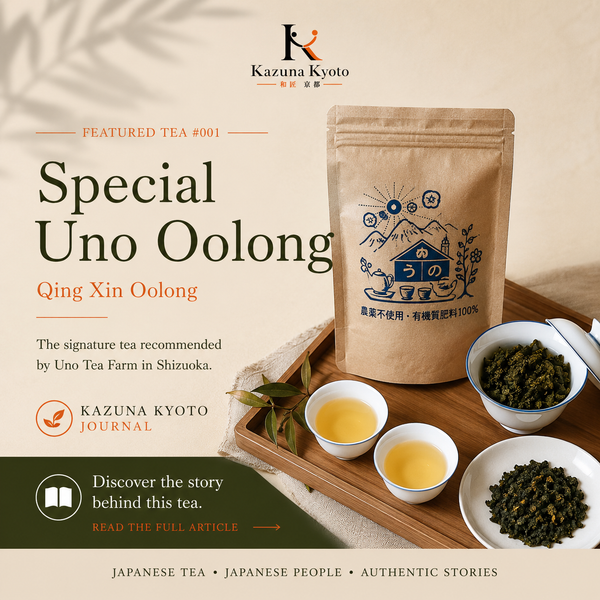
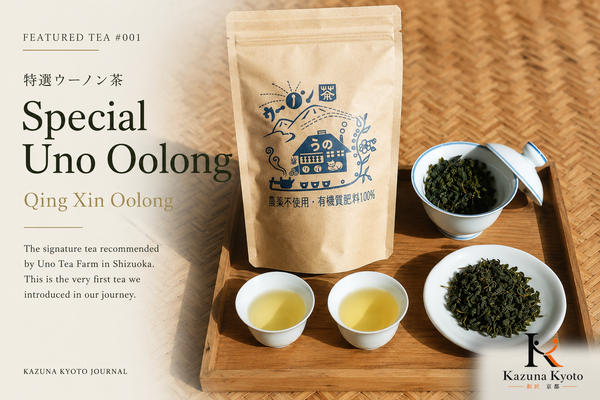
- A regional tea producer may not only be selling tea. It may offer a premium wellness, gifting, tourism, or hospitality product.
- A small manufacturer may not only be making parts. It may solve a supply reliability issue for niche overseas buyers.
- A local property service may not only be handling documents. It may reduce risk for foreign owners who cannot manage issues from overseas.
- A traditional craft business may not only preserve culture. It may provide design value for hotels, restaurants, and interior projects.
This is the use-case bridge.
It connects what the business is inside Japan with why a foreign customer should care.
Without that bridge, overseas readers may respect the business but not understand the opportunity.
Why This Matters for Overseas Founders and Investors
For overseas founders, investors, and business researchers, this explanation gap can create both risk and opportunity.
The risk is obvious.
If a business cannot explain itself clearly to foreign customers, market entry, partnership, distribution, or investment may take longer than expected.
The opportunity is also real.
Many Japanese regional businesses may have underexplained value. They may not be weak businesses. They may simply lack the English positioning, customer explanation, and market framing needed for overseas engagement.
This means that careful research matters.
Before assuming that a Japanese regional business has no international potential, it is worth asking:
- Is the value unclear, or is the business actually weak?
- Is the product unsuitable, or is the use case poorly explained?
- Is there no overseas demand, or has the business never been framed for overseas buyers?
- Is the website the problem, the offer the problem, or the market fit the problem?
These are different questions.
They lead to different conclusions.
The First Explanation Is a Market Entry Asset
For Japanese regional businesses, the first explanation is not a small copywriting task.
It is a market entry asset.
It helps foreign readers decide whether to keep paying attention.
It helps overseas buyers understand the use case.
It helps partners introduce the business to others.
It helps investors or researchers place the business inside a market category.
It also helps the business itself clarify what it is offering beyond local familiarity.
Many regional businesses already have value.
But value that is not explained clearly is difficult to convert into inquiry, partnership, sales, or investment.
For foreign customers, the first explanation should not begin with everything the company wants to say.
It should begin with what the reader needs to understand.
That difference matters.
If you are studying a Japanese regional business, product, or service for overseas customers, a short bilingual research brief can help clarify the value proposition, customer use case, and first explanation before you invest time in outreach or market entry.